About Me
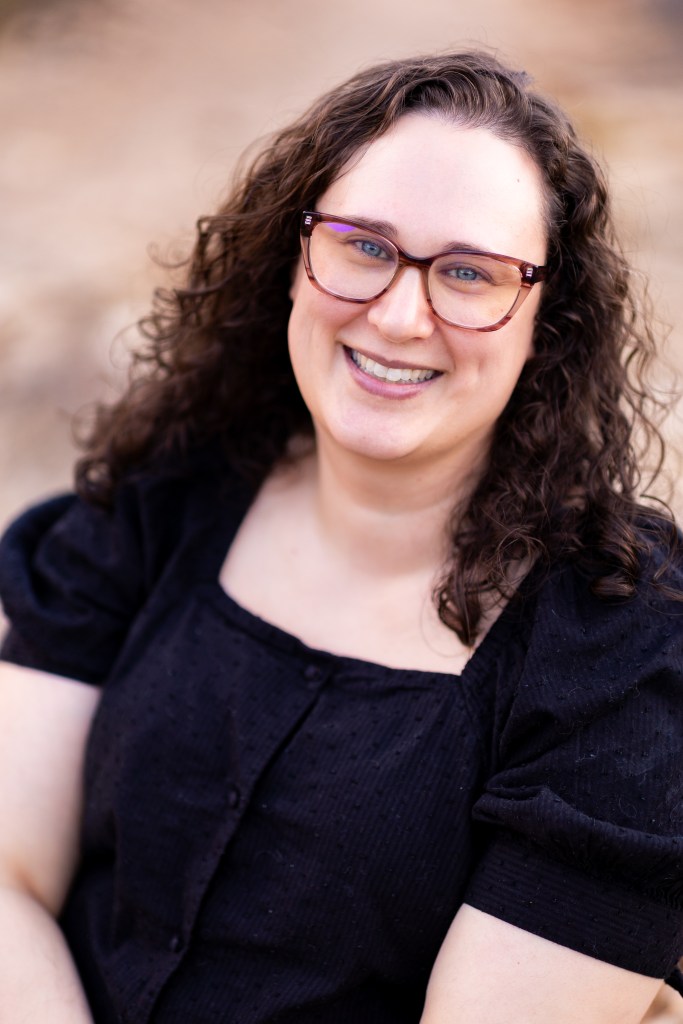
I think there’s a misconception about people who choose to become dietitians, that we’re all people who eat perfectly all the time and spend our time judging others for not eating healthy enough. Are there people like that? Sure. I’m not one of them. So, who am I and how did I get here?
When I was a child, I was a competitive swimmer, and because I burned so many calories, I ate a lot. At age 10, my family moved away from easy access to the YMCA, and when puberty hit, I started gaining weight. By the time I was a senior in high school, I was firmly in the “obese” category and feeling pretty bad about it. Diet culture permeates our culture and bullying overweight people has been described as the last socially acceptable form of discrimination. I tried many diets, but when they ultimately always failed, I told myself it’s because I was a bad person, a slob, a glutton.
In college, my mother was diagnosed with Type 2 Diabetes, and that’s when I discovered that you can get a degree in nutrition and become a registered dietitian. I switched my major the very next semester and discovered my true passion in life. My weight, however, refused to come off and now I had an even “better” reason for berating myself. I mean, how can someone who studies nutrition not know how to lose weight, right?
I spent my entire career feeling self-conscious and guilty for being overweight, and I did run into a couple people who looked down on me for being overweight as a dietitian, which only reinforced the narrative in my head that I was a “bad dietitian.” But the important part is I no longer get my self-worth from a number on the scale.
So again, how did I end up here, with a private practice focused on breaking the bonds of diet culture? A single off-hand comment that changed the course of my life. I was getting ready to start graduate school, where I was planning to focus on community nutrition, until I made a comment about my size and a friend told me, “You know, you’re not as big as you think you are.”
I had received similar comments throughout my life, but for some reason, this one got through to me and that’s when I realized I had been suffering from a fairly intense case of body dysmorphia. The person I saw in the mirror did not reflect what I really looked like. As a dietitian, I know how insidious and dangerous body dysmorphia is, so this was a huge wakeup call for me to change.
Upon starting graduate school a couple months later, the first course I took was one on obesity. It was not, as I expected, filled with all the ways people can lose weight. Instead, it focused on what the research is currently saying about obesity, which is that weight and weight loss are not as cut and dry as we’ve always thought. At the same time, I had decided to no longer restrict my eating habits and to learn to listen to my body.
Every course I took in grad school only reinforced that dieting might be the problem and not the solution. And in the meantime, I learned what my hunger-fullness cues were and discovered that the source of my heartburn was as simple as over eating. I did lose a significant amount of weight, but that was simply a biproduct of learning to listen to my body and not restricting my eating habits. My sugar cravings completely went away and I was able to eat food without guilt for the first time in my adult life.
This is what I want for you as well. Because let me tell you, there is nothing like being able to enjoy food while improving your health and happiness.
 Rachel Case, MFCS, RDN