Welcome back to the blog! If you’ve been following me for a bit, you’ll know that I’ve been going over different nutrients, what they do, and where to find them. So far, I’ve gone over sodium, potassium, and magnesium. This week will be yet another electrolyte: Calcium.
What does calcium do?
Are you perhaps surprised to see me calling calcium an electrolyte? I think most people know that calcium is needed for bone health, and I’ll get to that in a bit, but before I do, I thought I’d shed some light into the other main function of calcium.
So, what is it that makes calcium an electrolyte, and what exactly does that mean?
Electrolytes are substances that end up with a charge, either positive or negative, when dissolved in water. Calcium is one of those elements and one of its main functions is muscle contraction. In order to move your muscles, an electric charge needs to occur at the cellular level. Once again, I don’t want to go to technical here, but calcium often hangs out in the blood stream or interstitial fluid between your cells to be available to start the cascade of electrical and chemical changes needed for muscle contraction.
We’ve already learned that sodium and potassium are partners, but calcium and magnesium are also partners in muscle contraction. Magnesium is found inside the cells and calcium is found outside of the cell, and they often work together to move things into and out of your cell walls via electric signals.
Have you ever gotten a muscle cramp that just would not go away with water and some potassium? Often, people are low in potassium because we don’t eat enough foods that are potassium rich. However, that is not the only electrolyte that you may be deficient in. Calcium may also be the culprit for those muscle cramps. If you’re someone who is lactose intolerant or perhaps vegan, then you may find it more difficult to consume foods with calcium, leading to an imbalance in your electrolytes, increasing your risk of muscle cramps.
On a day-to-day basis, having an electrolyte imbalance is not cause for too much concern and is fairly easy to fix with the right foods or supplements. However, in the long term, being low in calcium can lead to conditions such as osteoporosis.
As most people know, calcium is the main mineral involved in keeping your bones strong. However, because of calcium’s role in muscle contraction, the body will prioritize calcium in the blood stream to keep your heart beating. So, if you aren’t consuming enough calcium regularly, over time your body will be taking calcium from your bones to make sure you can keep those muscles moving.
How much calcium do you need?
So, then that begs the question, how much calcium do you actually need on a day-to-day basis? It’s a pretty important nutrient, so we don’t want to get too low.
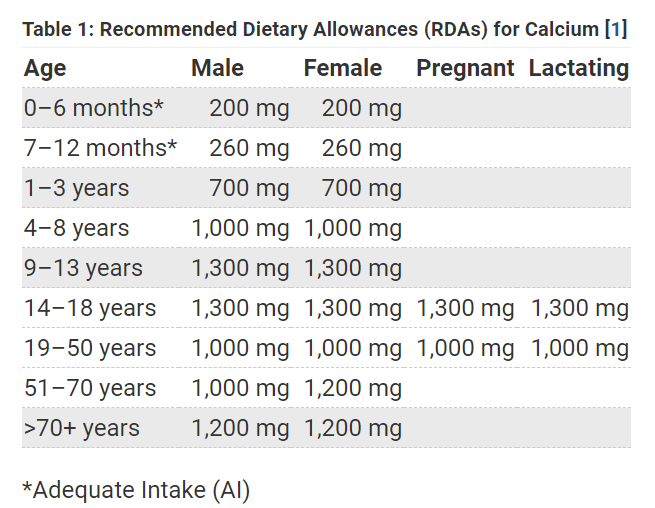
Above is the breakdown for how much calcium is recommended daily based on age and gender. As you can see, for the most part, the recommendations are the same for both genders up until women become post-menopausal. The reason for this is the role that estrogen plays in the absorption of calcium. It is not a direct relationship, but lower estrogen levels lead to lower calcium absorption from the gut. To combat this, consuming more overall calcium is recommended once women are post-menopausal.
Where can I find calcium?
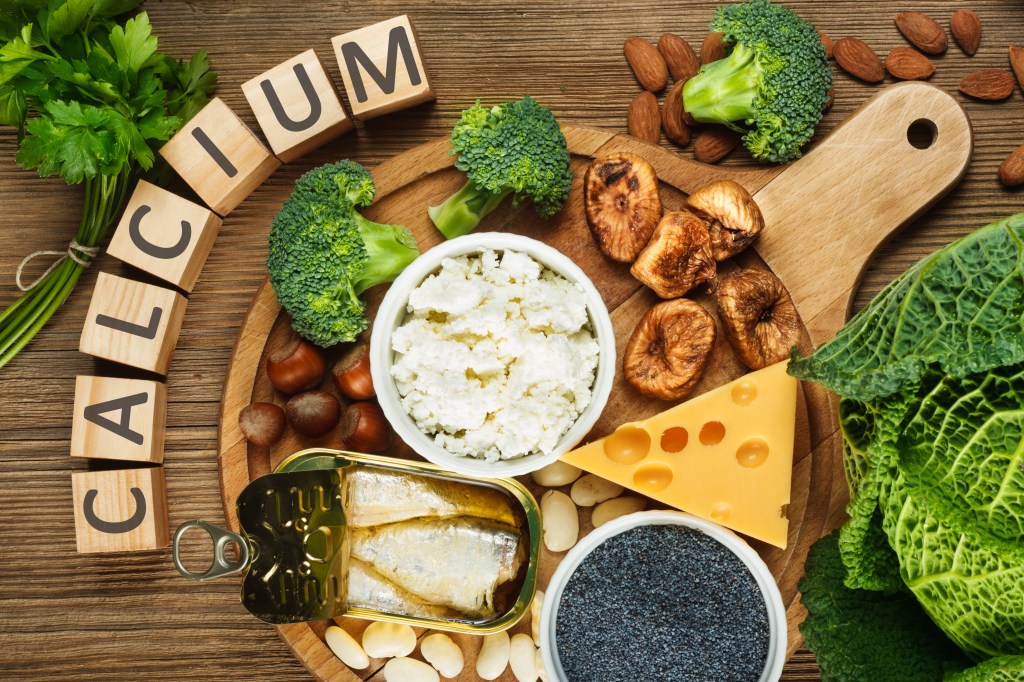
The most commonly known places to find calcium are in dairy products, such as milk, cheese, or yogurt. However, for people who are either vegan or lactose intolerant, there are some alternatives, listed below with the amount of calcium a serving typically provides:
- Chia seeds – 2tbsp = 179mg
- Soy milk – 1 cup = 450mg
- Tofu – calcium amounts vary by brand so check the label, but you can expect between 275-861mg per ½ cup
- Whole almonds – ½ cup = 192mg
- Dried figs – about 8 figs = 241mg
- White beans – 1 cup = 161mg
- Sunflower seeds – ½ cup = 54mg
- Broccoli rabe – 1 cup = 100mg
- Broccoli – 1 cup = 87mg
- Edamame – 1 cup = 98mg
- Kale – 2 cups raw = 180mg
- Sesame seeds – 1tbsp = 88mg
- Sweet potato – 1 large = 68mg
- Mustard and collard greens – 1 cup = 84mg
- Butternut squash – 1 cup = 84mg
- Okra – 1 cup = 82mg
- Oranges – 1 large = 74mg
- Fortified Orange juice – 1 glass = 300mg
As you can see, there are plenty of options for those who aren’t able to consume dairy. However, if you have other conditions that prevent you from consuming the foods listed above, or if you’re finding yourself unable to consume enough of them to meet the daily recommendations, you can also speak with your doctor about starting a calcium supplement.
I think it’s no surprise to anyone that calcium is an important nutrient, given we’ve heard a lot about it, but I hope that you have learned some new information that’ll help you lead a healthier lifestyle.
Below I’m of course going to list a recipe that’ll help you get in some extra calcium, but don’t forget to hit that subscribe button and let me know in the comments if you have any questions or topics you’d like me to go more in depth on.
Bliss Balls – High In Calcium
(From makingdanish.com)
Ingredients
- 150 grams dried figs, stems removed
- 75 grams medjool dates (could be substituted for figs).
- 3 tablespoons raw cacao powder
- 1,5 tablespoon ground poppy seeds (I just grind them in a coffee grinder)
- 60 grams tahini, preferably unsalted
- 35 grams oats
Optional:
- 50 grams dark chocolate chips
- 1 tablespoon marble syrup
- 1 teaspoon vanilla extract
Roll in:
- sesame seeds
- cacao powder
Directions
- Soak the figs for 5-10 minutes in a bowl of water.
- Drain the figs and add to a food processor with the remaining ingredients except the optional chocolate chips and blend well. Keep processing until you get a uniform mass.
- Optional step: if you want to add chocolate chips to the mix stir them in now.
- Roll the mass into 1 inch balls.
- Roll the balls into desired topping.
 Rachel Case, MFCS, RDN
Leave a comment